NATEC Launches Self-Paced Online OSHA Hazard Communication Course
Federal HazCom training that teaches employees to read labels and safety data sheets, with five interactive games that

Press Release Disclaimer: This is a press release distributed through the XPR Media network. It has not been independently verified by our newsroom.
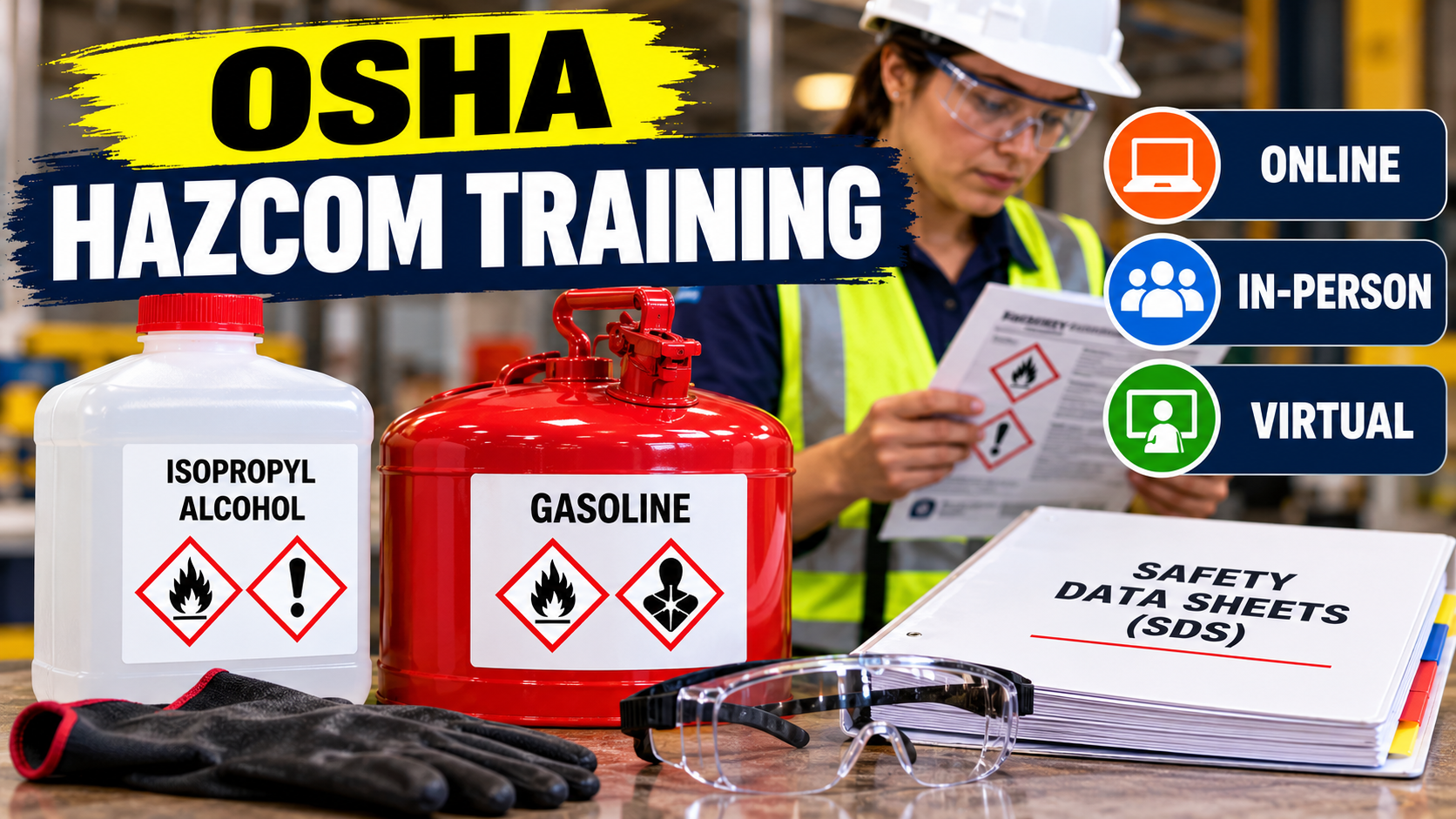

Federal HazCom training that teaches employees to read labels and safety data sheets, with five interactive games that make the rules stick
FOUNTAIN VALLEY, CA, UNITED STATES, November 2, 2026 /EINPresswire.com/ — An OSHA compliance officer walks a warehouse floor, points to an unmarked drum and asks the employee next to it two questions: what is in it, and where is the safety data sheet? If the employee cannot answer, the employer has a problem that no binder in the front office can fix. Hazard communication is built on that moment. NATEC International, Inc., a nationwide environmental health and safety training company headquartered in Fountain Valley, California, today announced its Federal OSHA Hazard Communication Online Training, a self-paced course that prepares employees to answer those questions on the job.
What the standard requires
The rule behind the questions is OSHA’s Hazard Communication Standard, 29 CFR 1910.1200, often called HazCom or the worker’s right to know. It requires employers with hazardous chemicals in the workplace to keep a written hazard communication program, a list of the hazardous chemicals on site, labels on containers, and a safety data sheet (SDS) for each chemical that employees can reach during every work shift. Electronic access is allowed as long as it does not create a barrier to getting the sheet right away.
It also requires training. Employees must be trained at the time of their initial assignment and again whenever a new chemical hazard they have not been trained on is introduced. That duty runs person by person, from the day someone is assigned to work with a chemical, not on a calendar date, so a facility that hires or reassigns people throughout the year has training to complete throughout the year.
How to read a label and an SDS
Two documents carry most of the information employees need. A shipped container label includes a product identifier, a signal word, pictograms, hazard statements and precautionary statements, along with the name, address and phone number of the manufacturer or importer. The signal word is “Danger” for the more severe hazards and “Warning” for the less severe ones. The hazard statements describe the nature of the hazard, and the precautionary statements say how to prevent exposure and what to do in an emergency.
The SDS goes deeper. It has sixteen sections in a fixed order, from identification and hazard identification through first aid, fire fighting, handling and storage, and exposure controls and personal protection. Because the order never changes, an employee who learns the layout once can find the answer in any sheet from any supplier.
Workplace labels and hazard classes
Many workplaces also use their own labeling systems on workplace containers. Systems such as the National Fire Protection Association (NFPA) diamond and the Hazardous Materials Identification System (HMIS) are commonly used for this purpose. The standard allows workplace labels that show the product identifier and words, pictures or symbols giving at least general hazard information, as long as employees can get the specific physical and health hazard details from other information available under the employer’s program. Chemicals are also sorted into physical hazards, such as flammables and corrosives to metals, and health hazards, such as irritants and carcinogens, and the classes tell employees what to look out for.
How the course works
NATEC built its course around the questions employees actually face at work. Learners practice reading a label and learn how the sixteen section SDS is organized so they can find first aid, handling, storage and exposure information quickly. The course explains NFPA diamonds and HMIS labels and how they relate to the labels required by the Hazard Communication Standard, which follows the Globally Harmonized System. It also covers the federal hazard classes, the parts of an employer’s written program, and the rights employees have to information about the chemicals they
Loi Tran
NATEC International, Inc.
+1 800-969-3228
Visit us on social media:
Instagram
Facebook
YouTube
X
Federal OSHA Hazard Communication Training: What Employers and Workers Need to Know
Legal Disclaimer:
EIN Presswire provides this news content “as is” without warranty of any kind. We do not accept any responsibility or liability
for the accuracy, content, images, videos, licenses, completeness, legality, or reliability of the information contained in this
article. If you have any complaints or copyright issues related to this article, kindly contact the author above.

Media gallery